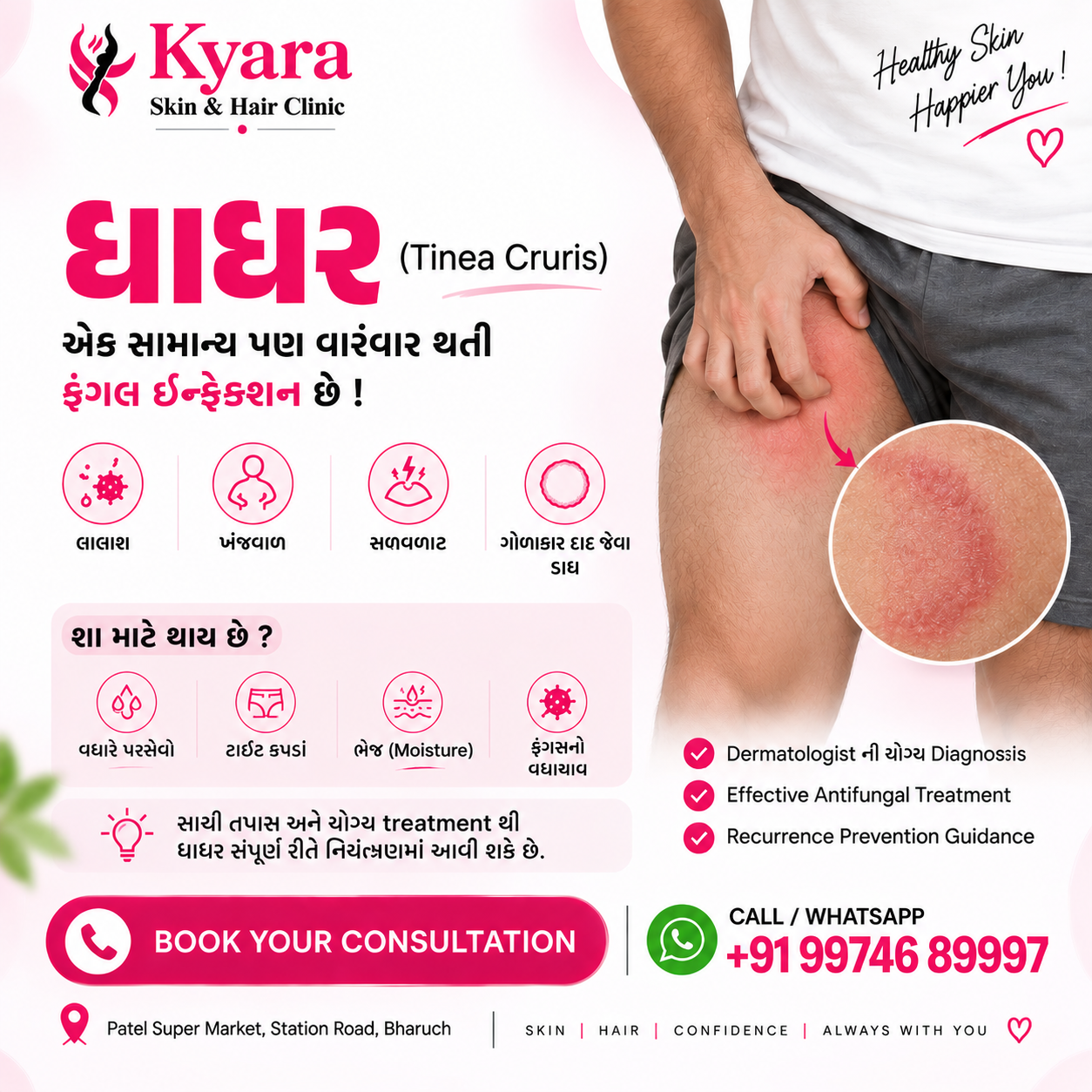
Tinea Cruris (Dhadhar) is a common but frequently recurring infection that needs medical care.
Symptoms & Triggers Summary
- Key Symptoms: Intense redness (lalash), burning itch (khanjwal), irritation (salvalat), and circular scaling border with central clearing.
- Major Triggers: Excessive sweating, tight non-breathable synthetic clothing, tropical moisture/humidity, and fungal spore proliferation.
- Dermatologist Solution: Accurate clinical diagnosis, targeted oral/topical antifungals, and strict hygiene protocols to prevent recurrence.
Understanding Tinea Cruris: The "Hidden" Discomfort
Tinea Cruris, commonly termed "Jock Itch" or groin Dhadhar, is a fungal infection caused by dermatophytes that colonize the folds of the groin, upper thighs, and buttocks. Because of the intimate location, many individuals hesitate to seek medical counsel, enduring months of chronic itching and discomfort.
In humid regions like Bharuch, Ankleshwar, and Surat, high ambient humidity combined with long commuting hours or physical labor creates the ideal conditions for fungal organisms like Trichophyton rubrum and Trichophyton mentagrophytes to flourish.
The 4 Primary Driving Factors Behind Tinea Cruris
- Excessive Perspiration (Hyperhidrosis): Sweat trapped in skin folds softens the protective stratum corneum, creating easy micro-pathways for fungal hyphae.
- Tight Synthetic Clothing: Tight jeans and synthetic activewear trap moisture and generate friction, abrading the skin barrier.
- Ambient Humidity: Monsoons and warm coastal summers accelerate spore replication.
- Fungal Reservoir in Footwear (Tinea Pedis): Many patients also harbor unnoticed fungal infection on their feet (athlete's foot). Pulling underwear over infected feet transfers spores directly to the groin.
"Fungal spores can survive on fabrics and beddings for weeks. Treating your skin without treating your hygiene habits almost guarantees a relapse."
Why Do So Many Patients Suffer Recurrence?
At Kyara Clinic, we frequently see patients who report: "The rash goes away for two weeks and then comes back worse." The reasons are almost always identical:
- Stopping medications the moment the itching subsides, leaving live microscopic fungal hyphae in hair follicles.
- Using over-the-counter mixed corticosteroid creams that temporarily mask symptoms while allowing the fungus to invade deeper tissue.
- Re-infecting themselves through untreated clothing, towels, or bed linen.
The Kyara Recurrence Prevention Roadmap
- Complete the Full Course: Even after the skin looks 100% normal, continue prescribed topical antifungals for an additional 14 days to eliminate latent spores.
- Disinfect Clothing: Wash all undergarments in warm water with an antiseptic rinse; dry in direct sunlight and iron the inner lining.
- Always Wear Socks Before Underwear: If you have any foot scaling or athlete's foot, putting socks on first prevents fungal transfer to the groin.
- Use Dusting Powders Daily: Apply prescription clotrimazole or miconazole dusting powder into skin folds before starting your day to keep the area dry.